|
Metal Shearing |
| |
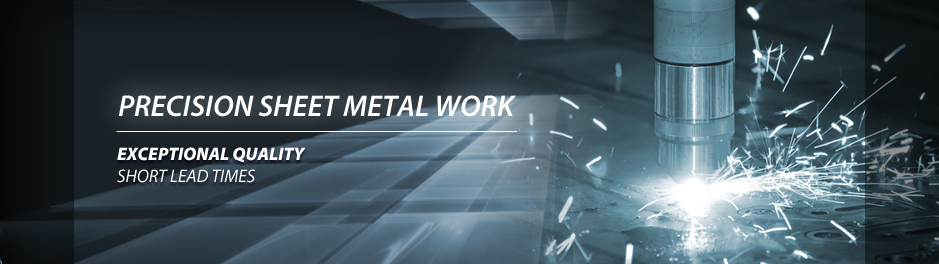
With our Edwards Pearson guilotine we have the capability to cut mild steel up to a thickness of 6mm, aluminium 6mm and stainless steel 3mm. All of these can be cut up to length of 3 metres.
|
| |
Process |
Cutting processes are those in which a piece of sheet metal is separated by applying a great enough force to caused the material to fail. The most common cutting processes are performed by applying a shearing force, and are therefore sometimes referred to as shearing processes or metal shearing. When a great enough shearing force is applied, the shear stress in the material will exceed the ultimate shear strength and the material will fail and separate at the cut location. This shearing force is applied by two tools, one above and one below the sheet. Whether these tools are a punch and die or upper and lower blades, the tool above the sheet delivers a quick downward blow to the sheet metal that rests over the lower tool. A small clearance is present between the edges of the upper and lower tools, which facilitates the fracture of the material. The size of this clearance is typically 2-10% of the material thickness and depends upon several factors, such as the specific metal shearing process, the material and the sheet thickness.
The effects of shearing on the material change as the cut progresses and are visible on the edge of the sheared metal. When the punch or blade impacts the sheet, the clearance between the tools allows the sheet to plastically deform and "rollover" the edge. As the tool penetrates the sheet further, the shearing results in a vertical burnished zone of material. Finally, the shear stress is too great and the material fractures at an angle with a small burr formed at the edge. The height of each of these portions of the cut depends on several factors, including the sharpness of the tools and the clearance between the tools.
To speak to us about our metal shearing capabilities or any of our other metal working services contact our sales team by emailing sales@redboxengineering.com or calling on 02380 254285.
|
| |
|
|
|
|